


Understanding the Danger Before It’s Real
You log on one evening, a little lonely, hoping for something real. You see a warm profile picture, send a message, and suddenly someone replies with thoughtful words and genuine interest. It feels promising until small things start piecing together in your mind, and suddenly, what felt like connection, begins to feel a bit too perfect.
That’s when the red flags begin to flicker.
Scammers don’t always announce themselves loudly. Romance scams are often built on subtlety. At first, there’s charm, emotional warmth, and trust. But underneath, there may lie a carefully designed trap.
Recognizing these red flags early gives you power to protect your emotions, time, and money.
Why Red Flags Matter More Now Than Ever
In 2025, romance scams have become more sophisticated. Scammers use:
- Stolen or AI-generated photos
- Deepfake videos to simulate real people
- Heartfelt, personalized stories crafted to win trust
They don’t just pretend they perform. And what they perform is often deeply convincing.
Because of this, spotting red flags is more important than ever. A small detail might be the key to uncovering a big lie.
Early Red Flags During the First Conversations
Some of the first warning signs show up very early sometimes in the first few messages. Watch out for:
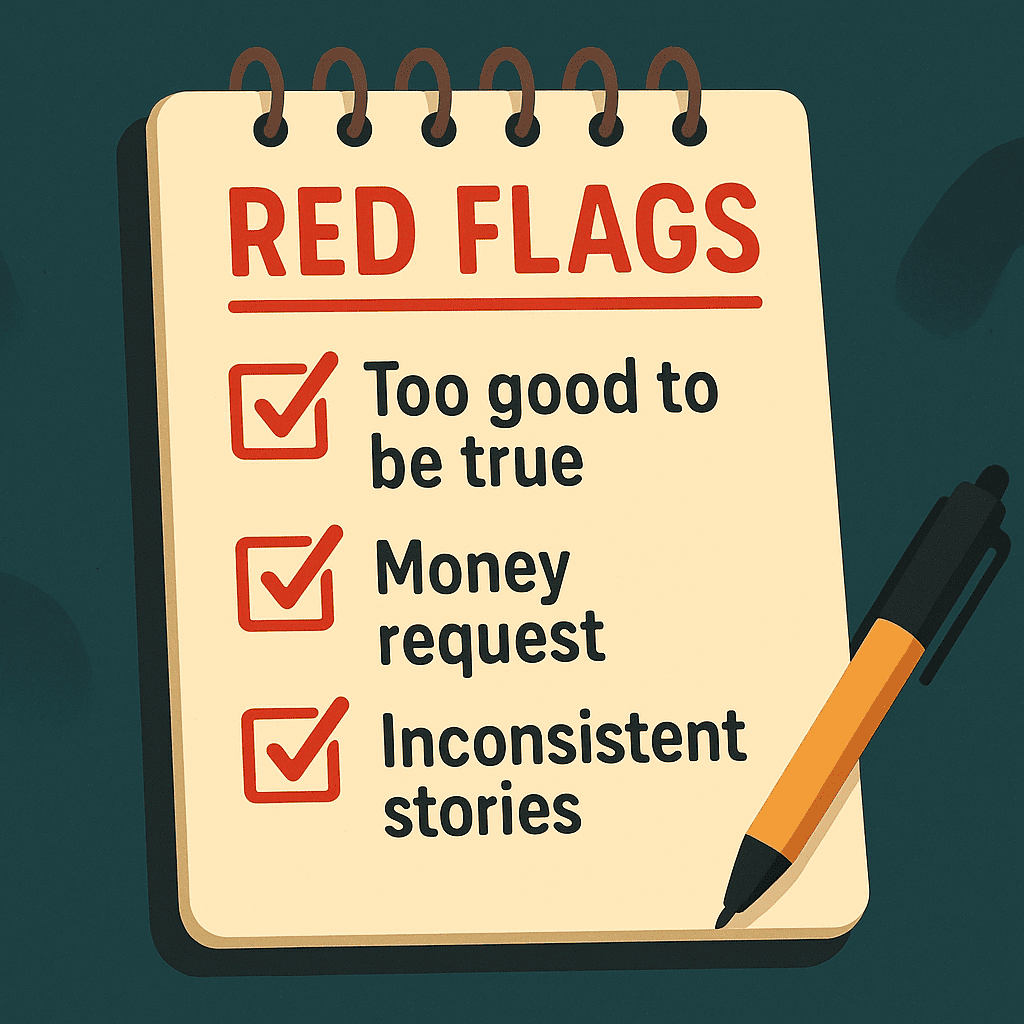
- Too much, too soon: They profess strong feelings after just a few chats.
- Unrealistic perfection: Their profile seems polished, their life too ideal.
- Avoidance of personal questions: They dodge real questions about their day-to-day life.
- Quick move off-platform: They ask to switch to private apps (WhatsApp, Skype) very early.
When these things occur, it could mean that the person on the other side is more interested in building trust fast not building a real relationship.
Red Flags in Communication Style
After the initial conversation, how someone communicates can reveal a lot. Here are common communication red flags in romance scams:
- Messages feel rehearsed, overly romantic, or too good to be true.
- They are reluctant to use voice or video calls, giving excuses or avoiding them altogether.
- Their backstory involves them “living abroad” or working in ways that make travel or relocation difficult.
- They tell dramatic or tragic stories (e.g., illness, loss) to gather sympathy and emotional investment.
These are not random quirks they’re classic manipulation tactics.
Financial Red Flags That Signal a Scam
Once emotional trust is built, many scammers begin to ask for money. These are the major financial red flags:
- They suddenly request help for an “emergency” (medical bills, visa issues, etc.).
- They ask you to send money via risky or untraceable channels.
- They promise big returns or future repayment that always seems “just around the corner.”
- They involve third parties: “My sister needs help,” or “A friend is stuck somewhere.”
If someone you just met online is asking for money especially early and urgently that’s a serious sign something is wrong.
Behavioral Red Flags in Their Story & Actions
Beyond just their words, their behavior might raise red flags too:
- Inconsistencies in their life story or job details.
- Frequent “crises” that always require your help.
- They share too little about their own life but ask a lot about yours.
- They discourage you from verifying them (photos, video calls, social media).
Over time, these odd behaviors point to a pattern a pattern that doesn’t align with genuine relationships.
How to Respond When You Notice Red Flags
When red flags start appearing, here’s how you can protect yourself:
- Ask for verification. Suggest a video call or photo exchange.
- Slow things down. Don’t rush into private chats or financial help.
- Do some research. Reverse-image search their photos.
- Set healthy boundaries. Make it clear that money isn’t part of early conversations.
- Tell someone. Share your concerns with a trusted friend or family member.
Taking action early can save you from making costly mistakes emotionally or financially.

Real-World Example: Emma’s Near Escape
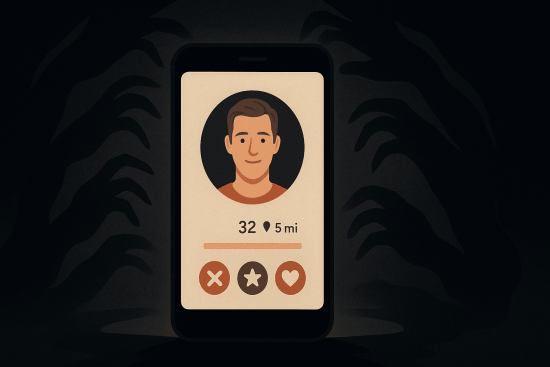
Emma was a graphic designer who met “Mark” on a dating app. He had a handsome smile and worked overseas. Within a week, Mark was telling Emma how much he cared. He said he had financial trouble and needed help wiring money to pay for a business deal gone wrong.
Emma felt an emotional bond. But she also felt uneasy. She asked for a video call. Mark always said he was too busy, but promised to show his office “soon.” She did a reverse image search on his photo and discovered his pictures linked to multiple profiles with different names.
That was enough for Emma to step back. She refused to send any money and eventually blocked him. Later, she realized she might have been part of a scam attempt.
Emma’s story could have ended very differently because she recognized red flags early, she protected herself.
Why Trusting Your Gut Helps
Often, your intuition will sense when something is off. Trusting your gut when you see these red flags is powerful.
- If something feels too good it might be fake.
- If questions are always deflected they may be hiding something.
- If you feel pressured that pressure is not part of healthy relationships.
You deserve honesty, clarity, and safety. If your instincts tell you the relationship is moving too fast, you are justified in pausing and reevaluating.
Red Flags & Safety
Romance is beautiful but scam romance is dangerous. The more you know about the red flags, the better you can protect yourself. Scammers are experts in pretending, but they make mistakes too. You just need to spot them.
Stay cautious, stay curious, and don’t rush. Building real connection takes time and real people don’t pressure you into secret financial deals. When you see the red flags, take a breath, slow down, and make smart decisions.
FAQs
What are some subtle red flags I might miss?
Subtle signs include overly poetic messages, vague life details, and a reluctance to meet in a real video. Trust your instincts when things seem just a little off.
How can I verify if someone is genuine?
Ask for a live video call, do a reverse image search on their profile photo, and check whether their social media presence feels consistent and real.
Should I block someone immediately if I notice red flags?
Not necessarily. First, voice your concerns, and ask for verification or slow down the conversation. But if the red flags persist especially financial requests blocking may be the safest move.