



Romance fraud is not just a scam it’s an emotional strategy built on deep psychological manipulation. At its center lies one powerful weapon: Fake Emotional Bonds. These bonds are crafted with precision, empathy, and consistent emotional validation, making victims believe they’ve finally found someone who understands them. The tragedy begins when a simple message turns into a connection that feels meaningful, comforting, and safe.
What makes romance fraud so dangerous is not the scammer’s words, but how those words tap into emotional needs loneliness, hope, affection, or the desire to be valued. Every conversation, every compliment, and every “good morning” text becomes a carefully engineered step toward emotional dependence.
This article breaks down the psychology behind these Fake Emotional Bonds, revealing how scammers create them, why they’re effective, and how you can protect yourself without losing your natural desire for love and connection.
Fake Emotional Bonds Begin With Emotional Timing in Romance Fraud
The first stage of romance fraud is never about money it’s about emotional timing. Scammers understand that emotional availability is predictable. People who feel lonely late at night, stressed after work, or isolated due to personal struggles are more responsive to affection. So they reach out when your emotional walls are down.
This is how Fake Emotional Bonds begin: not with manipulation, but with attention at the exact moment you crave support. They respond when others don’t. They listen when others are too busy. They treat your feelings as important, making you believe the bond is genuine. Your trust forms not because they’re charming, but because they’re consistent sometimes more consistent than real people in your life.
- Scammers observe your online status, posting times, or emotional tone in your messages.
- They reply immediately when you sound upset or distant, reinforcing the Fake Emotional Bonds through emotional presence.
- Their emotional responses are crafted to sound supportive and validating, making you believe someone finally understands you.
- They may express concern when you’re quiet, offer encouragement during tough days, or celebrate your small wins.
- Because these reactions match your emotional rhythm so closely, you naturally feel connected.
- The brain interprets timely emotional attention as genuine care, strengthening the bond even if it’s artificial.
This emotional timing sets the foundation for deeper Fake Emotional Bonds that feel real long before you notice the red flags.
Fake Emotional Bonds Grow Through Mirroring and Emotional Reflection
One of the strongest psychological tools behind romance fraud is mirroring reflecting your emotions, interests, values, and communication style. When someone feels like your emotional twin, your brain interprets the connection as compatibility. That’s exactly why Fake Emotional Bonds develop so quickly. Scammers pay attention to every detail: how you express feelings, how you joke, what you fear, what you desire, and how you see relationships.
They gradually reshape themselves to become the “perfect match.” When you share a story, they share a similar one. When you express a value, they adopt it. When you reveal a weakness, they reveal a carefully fabricated one that matches yours. This mirroring creates a powerful illusion of emotional closeness.
- Mirroring triggers a psychological effect known as “emotional familiarity,” which builds Fake Emotional Bonds rapidly.
- Scammers match your texting style fast replies, emojis, tone, or depth to seem naturally aligned with you.
- They mimic your emotional vulnerabilities, making you feel seen and understood.
- Shared “stories” they reveal are often scripted to match the emotional energy you show.
- They validate your opinions, increasing your trust and openness.
- This reflection builds a compatibility illusion strong enough to overshadow doubts or red flags.
By the time you notice inconsistencies, your heart already believes in the Fake Emotional Bonds created through emotional mirroring.
Fake Emotional Bonds Strengthen Through Future Promises and Fantasy Building
To maintain long-term engagement, scammers use a psychological technique called “future faking.” They create a shared dream plans, goals, trips, or commitments to make the relationship feel real. Fake Emotional Bonds rely heavily on these fantasies because they create emotional investment. Suddenly, you’re not just talking to someone; you’re imagining a future with them.
Scammers might talk about meeting soon, building a life, or even planning commitments like marriage. These fantasies trigger dopamine, making the bond feel rewarding even without real-world interaction.
- Scammers describe ideal futures tailored to your personal dreams.
- They promise stability, love, and partnership, reinforcing Fake Emotional Bonds.
- Their plans always feel close but never actually happen due to sudden “emergencies.”
- The fantasy keeps you emotionally invested even when doubts arise.
- This illusion of progress makes victims patient, loyal, and trusting.
- Emotional investment makes it harder to detach when inconsistencies appear.
Fake Emotional Bonds become stronger when your heart starts believing the future is already written until the truth breaks the illusion.

Fake Emotional Bonds Lead to Emotional Dependency in Romance Fraud
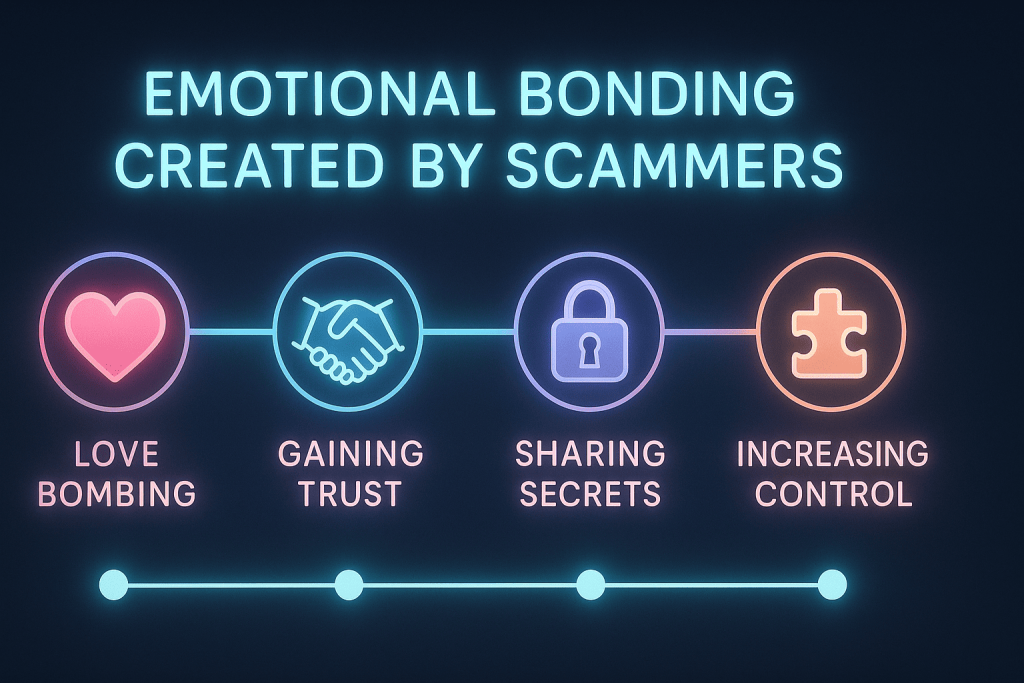
The psychology of romance fraud relies heavily on creating emotional dependency. Once Fake Emotional Bonds are firmly in place, scammers subtly shift the relationship dynamic. They might check on you constantly, show concern, or claim you’re the only person they trust. This level of intensity feels romantic at first, but it slowly conditions the mind to depend on their presence.
The relationship becomes emotionally addictive. They withdraw suddenly to create fear. They return with affection to create relief. This push-pull cycle strengthens the bond even further.
- Emotional dependency forms when your mood starts depending on their messages.
- Scammers use emotional highs (affection) and lows (disappearances) to tighten Fake Emotional Bonds.
- They portray themselves as emotionally vulnerable, making you feel needed.
- They encourage isolation by suggesting only they understand you.
- Dependency makes their red flags look less threatening.
- Once dependency forms, financial manipulation becomes easier.
Fake Emotional Bonds don’t just connect you they trap you emotionally, making it incredibly difficult to detach even when something feels wrong.
Breaking Fake Emotional Bonds Starts With Awareness and Boundaries
Escaping romance fraud begins with understanding how Fake Emotional Bonds work. The moment you recognize emotional manipulation, the psychological spell weakens. Boundaries are your strongest defense. Paying attention to patterns, asking questions, verifying details, and avoiding personal or financial information exchanges prevents deeper harm.
Awareness turns Fake Emotional Bonds into visible tactics instead of invisible emotional traps.
- Recognize overly consistent emotional availability it’s often scripted.
- Notice if they avoid video calls, real-life meetings, or transparent communication.
- Look for stories that constantly change or contain dramatic events requiring empathy.
- Maintain boundaries about money, personal details, and emotional dependency.
- Share your concerns with someone you trust for an outside perspective.
- Document red flags to help break emotional denial.
Fake Emotional Bonds lose their power the moment you understand the psychology behind them. Knowledge creates distance, and distance restores clarity.
FAQs
Why do Fake Emotional Bonds feel so real during romance fraud?
Because scammers use psychology timing, empathy, and emotional mirroring to create a connection that feels natural and perfectly aligned with your emotional needs.
Can emotionally intelligent people still fall for Fake Emotional Bonds?
Absolutely. Romance fraud targets emotional vulnerability, not intelligence. Anyone seeking connection can be manipulated through emotional consistency and empathy.
How can I protect myself from Fake Emotional Bonds in online dating?
Verify identities early, avoid financial requests, look for behavioral inconsistencies, and question relationships that grow unusually fast or feel overly perfect.