



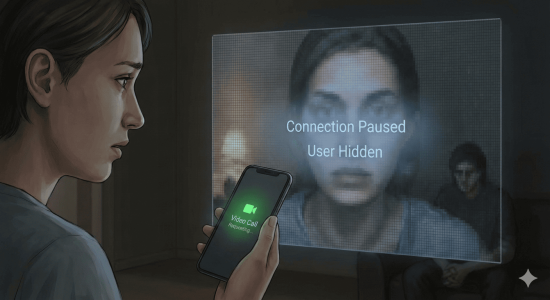
At first, everything feels real. The messages arrive on time, the tone feels warm, and the interest seems genuine. Then you suggest video chats and suddenly, something changes. Excuses appear. Delays grow longer. The connection feels less certain. This moment is not random. Video chats are one of the biggest threats to online scammers. They expose reality in seconds. Understanding why scammers avoid video chats can protect you from emotional harm, financial loss, and long-term trust issues.
This article explains the psychology, tactics, and warning signs behind video chat avoidance in a clear and human way.
Why Video Chats Break the Scammer’s Illusion
Scammers carefully design an illusion. Through text and images, they control how you see them. Video chats destroy that control. A live camera reveals voice, expressions, surroundings, and timing things scammers cannot easily fake. Many scammers use stolen photos, scripted messages, or even multiple operators managing accounts. Video chats require one real, consistent identity. That’s why scammers fear them. The moment a live face appears, lies collapse.
Small details like hesitation, background noise, or mismatched appearance expose the truth. Video chats turn imagination into reality, and scammers cannot survive that shift.
- Live video reveals real identity
- Scammers lose control of the narrative
- Stolen photos become useless
- Multiple-person operations fail
Why Scammers Create Excuses to Avoid Video Chats
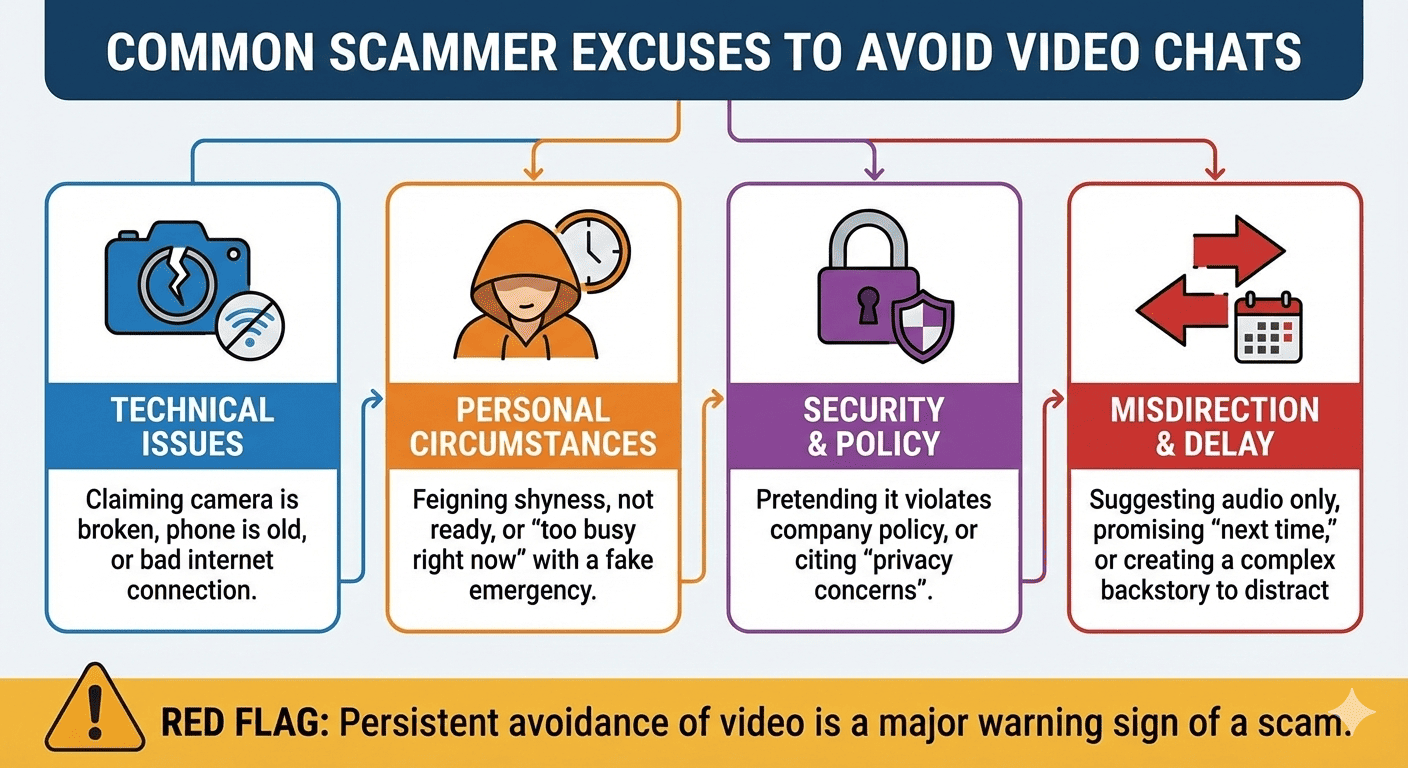
When asked for video chats, scammers rarely say “no” directly. Instead, they delay. Poor internet, broken cameras, work restrictions, or sudden emergencies become common stories. These excuses are designed to sound reasonable and temporary. The goal is to keep you emotionally invested while postponing exposure. Over time, these delays create doubt, but also attachment. Scammers know that the longer you wait, the harder it becomes to walk away.
Recognizing repeated excuses is essential. Real people may face technical issues once, but scammers repeat them endlessly.
- Claiming bad internet connections
- Camera or phone problems
- Work or military restrictions
- Unexpected emergencies every time
Why Video Chats Expose Voice and Emotion Mismatch
Scammers rely on carefully written messages to control tone and emotion. Video chats remove that safety net. A person’s voice, facial expressions, and reaction speed reveal authenticity. Many scammers struggle with real-time emotional responses. Some use scripts and translators, making live conversation difficult. Others operate from noisy environments or scam centers where privacy is impossible.
Video chats expose hesitation, unnatural pauses, and emotional inconsistency. These small signals quickly raise suspicion. What felt sincere in text may feel empty or forced on camera.
- Delayed or unnatural responses
- Flat or inconsistent emotions
- Language or accent mismatches
- Noisy or hidden environments
Why Video Chats Prevent Long-Term Manipulation
Scammers depend on long-term emotional manipulation. They slowly build trust, dependency, and emotional reliance. Video chats interrupt this process. Seeing a real face too early creates clarity. It humanizes the interaction and reduces fantasy. Victims who engage in video chats early are far less likely to send money later.
Scammers know this. That’s why they delay video interaction until after emotional hooks are set. When video chats are avoided, manipulation continues unchecked. Early visibility protects emotional boundaries.
- Reduces emotional fantasy
- Builds realistic expectations
- Interrupts dependency cycles
- Limits manipulation tactics
Why Deepfake Video Chats Are Still Rare
Some people worry about fake video chats using deepfake technology. While this exists, it is still rare and difficult to maintain in live conversations. Deepfake video chats require advanced tools, strong internet, and controlled environments. Most scammers prefer low-risk, text-based methods. Live deepfake calls increase the chance of technical failure and detection. That’s why scammers usually avoid video chats entirely instead of faking them. Simplicity and scale matter more to scammers than realism.
- High technical requirements
- Risk of glitches or exposure
- Expensive tools
- Limited scalability
Why Video Chats Reveal Time Zone and Location Lies
Scammers often lie about where they live or work. Video chats make these lies harder to maintain. Background sounds, lighting conditions, and daily routines expose real locations. A claimed city may not match daylight hours. Accents may not match stated origins. Even casual details like weather comments can reveal inconsistencies. Video chats connect reality with timing, something scammers struggle to fake repeatedly. Over time, these small contradictions add up.
- Daylight mismatches
- Accent inconsistencies
- Background environmental clues
- Routine timing conflicts

Why Video Chats Shift Power Back to the User
In text-based communication, scammers control pacing, tone, and information. Video chats shift power back to the user. You can ask spontaneous questions, observe reactions, and end the call instantly. Scammers lose their advantage when forced into real-time interaction.
This loss of control makes them uncomfortable. That discomfort often appears as avoidance, excuses, or emotional manipulation. Recognizing this power shift helps you understand why video chats are so important for online safety.
- User controls the interaction
- Spontaneous questions reveal truth
- Scammers lose scripting control
- Immediate exit options
Why Repeated Video Chat Avoidance Is a Major Red Flag
One missed video call means nothing. Repeated avoidance means everything. When weeks or months pass without a single video interaction, it’s time to reassess. Scammers rely on patience and emotional attachment. They hope you stop asking. But consistent avoidance is not normal behavior in genuine connections. Trust patterns, not promises. If video chats are always postponed, the risk is real. Walking away early protects your time, emotions, and confidence.
- Repeated cancellations
- Endless excuses
- Emotional pressure to stop asking
- Promises without action
FAQs
Is refusing video chats always a scam sign?
One refusal is normal. Repeated avoidance over time is a strong warning sign.
Can scammers fake video chats?
Most scammers avoid live video due to technical risk. Deepfake calls exist but are rare.
How soon should I suggest video chats?
Early in the conversation. Genuine people usually agree without repeated excuses.