

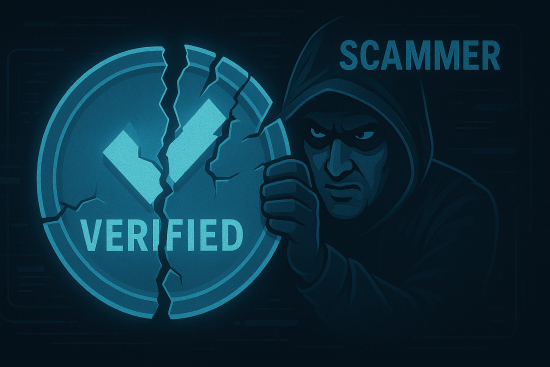
The tiny blue checkmark on a profile used to feel like a shield something that instantly meant real, trusted, and safe.
But in 2025, the truth is uncomfortable:
Verified badges don’t stop scammers anymore.
From dating apps to Instagram, from messaging platforms to new AI-powered social networks, scammers have found ways to slip behind the badge and trick people who think they’re talking to someone legitimate.
In this guide, we’ll uncover why Verified Badges have lost their power, how scammers exploit them, and how you can protect yourself even when the account looks “official.”
Verified Badges: Why They Once Mattered and Why They Don’t Today
Verified badges originally meant the platform had personally confirmed someone’s identity.
Creators, celebrities, businesses, and public figures relied on these badges to build trust. People felt safe messaging or interacting with them.
But starting in 2023 and growing rapidly through 2025, verification became:
- Easy to buy
- Easy to fake
- Easy to imitate
- Harder to trust
The Meaning Has Changed
Instead of representing identity confirmation, badges on many platforms now simply mean:
- The user pays for a subscription,
- Or completed a basic automated verification,
- Or passed a weak identity check using documents that are easy to forge.
Scammers love this shift it gives them a new mask.
Verified Badges: How Scammers Use Them to Look Real
Scammers know trust is the biggest door into a victim’s life. When they see a blue check, people lower their guard.
Ways Scammers Exploit Verified Badges
- Create verified accounts using fake or stolen ID
- Buy verification through platforms that allow paid badges
- Rent verified accounts on the dark web
- Hack verified profiles and take over them
- Use AI-edited documents to pass verification checks
- Create fake customer support or business pages with badges
Why It Works So Well
Because users assume:
- “If they’re verified, they must be safe.”
- “Verified accounts don’t scam.”
- “Platforms check these things.”
This false sense of security is exactly what scammers rely on.
Verified Badges: Why Platforms Can’t Keep Up With Scammers
Scammers evolve faster than platform security systems.
Major Challenges Platforms Face
- AI-generated identities
People can create realistic faces and passports using AI. - Document forgery tools
Highly advanced forgery tech can bypass weak verification. - Cheap dark web services
Scammers can buy verified accounts for as little as $15–$50. - Identity farming
Some operations create hundreds of fake profiles with real-looking documents. - Huge volume of appeals & verifications
Platforms simply can’t investigate every account deeply.
The Result
A badge becomes less about identity… and more about probability.
Maybe they’re real. Maybe they’re not.
Verified Badges: What Users Still Wrongly Assume
Most victims in online scams share one thing in common: They trusted the badge more than the behavior.
Common Misunderstandings
- “Verified means real person”
- “Verified won’t ask for money”
- “Verified means safe to date”
- “Verified business equals authentic business”
- “Verified means they passed a background check”
- “Verified means the platform vouches for them”
But none of this is true. A badge is just an icon not a character certificate.
Verified Badges: How Scammers Use Them in Dating Scams
Dating scams have evolved far beyond fake photos and smooth messages.
Now scammers use verified accounts to:
- Appear professional
- Look trustworthy
- Convince victims faster
- Pretend to be real entrepreneurs or investors
- Offer “mentorship” in crypto or business
- Fake emotional intimacy to gain financial access
Example Scenario
A scammer with a verified badge:
- Messages you daily
- Talks about life goals
- Sends curated photos
- Shares “investment opportunities”
You believe them because they look real. But the badge doesn’t protect you your awareness does.
Verified Badges: Warning Signs Even If the Account Is Verified
A verification badge should never override common sense.
Red Flags to Watch
- They talk about crypto or investments early
- They avoid live video calls
- They ask for money or financial help
- Their lifestyle looks too perfect
- They push you to join a certain website or app
- Their stories sound inconsistent
- They get emotional too fast
- They call you “soulmate” too soon
Behavior Speaks Louder Than Badges
If the profile is verified but the behavior is strange Always protect yourself.
Verified Badges: How to Protect Yourself in 2025
The new rule for digital safety is clear: Trust behavior, not badges.
What You Should Do
- Check their profile history
- Reverse-search their photos
- Look for inconsistencies in stories
- Ask for live video confirmations
- Avoid sending money
- Avoid investment discussions
- Verify their business outside the platform
- Read online reviews
- See if other users reported them
Golden Rule
A real person never rushes you. A scammer always pushes urgency.
Verified Badges: Why Multi-Step Verification Is the Future
Badges alone are outdated. 2025 cybersecurity experts recommend multi-layer identity trust, such as:
- Behavior analysis
- Real-time video verification
- Document cross-checking
- Trusted references
- Relationship timelines
- Platform interaction history
As scams grow smarter, users need smarter ways to stay safe.
Verified Badges: Be Smarter Than Scammers
The Internet is full of good people but also full of clever scammers who use tools like verified badges to hide behind a mask of authenticity.
But when you understand:
- how the scam works,
- how badges can be faked,
- and how behavior reveals truth you become harder to fool.
Your safety doesn’t depend on a blue check. It depends on your awareness, caution, and confidence to question anything that doesn’t feel right.
FAQs
Do verified badges guarantee someone is real?
No. A verified badge only proves the platform approved the profile, not that the person is trustworthy or safe.
Can scammers get verified badges easily?
Yes. Through fake documents, hacked accounts, paid verification, or dark web services, scammers can obtain verified badges with little effort.
How do I stay safe if badges can’t be trusted?
Focus on behavior, not badges. Look for consistency, do video calls, verify identities manually, and avoid financial conversations with strangers.